
What is sustainability? What should the sustainable athlete look like? Probably not very different from anyone else who tries to do the right thing by shopping and eating seasonally and locally. When it comes to the food choices we make its a good idea to start with some basic ethics. Over time you may find yourself modifying them as you become more confident in where to shop and what to buy.
First lets take a look at what the term sustainability means. Here are a couple of decent definitions with which I have no problem. The first is from a seemingly unlikely source the EPA ( http://www.epa.gov/sustainability/basicinfo.htm ) On their webpage they write. “Sustainability is based on a simple principle: Everything that we need for our survival and well-being depends, either directly or indirectly, on our natural environment. Sustainability creates and maintains the conditions under which humans and nature can exist in productive harmony, that permit fulfilling the social, economic and other requirements of present and future generations. Sustainability is important to making sure that we have and will continue to have, the water, materials, and resources to protect human health and our environment.”
Not bad. While our friends over at Wikipedia offer a lengthy dissertation on the subject, one section specific to food systems, ( http://en.wikipedia.org/wiki/Sustainability ). It’s worth a read. Check it out.
Admittedly the label of sustainability may seem to be overused, abused and co-opted by more than one company or corporation. The seemingly obvious conflicts of interest and lack of transparency work to further dilute the meaning and significance of the label. Still, that is what we have and a better phrase hasn’t popped up yet. We’ll leave it that eating sustainably can serve as a a road marker to a living and eating ethic.
So rather than get into a full on scree about what we should be eating, why, where to purchase ( or not) I’m going to offer several guidelines for how I think a well seasoned athlete might purchase the foods they cook and eat.
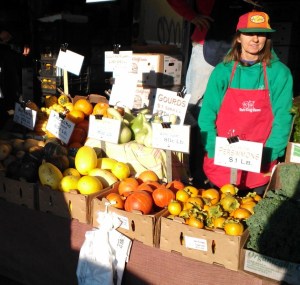
Things to consider:
1. Try shopping at a farmers’ market at least once a week.
2. Buy the things that excite you and don’t be afraid to try a vegetable that you haven’t tried before. 
3. Don’t agonize over organic vs conventional at this point. While I am a big advocate of organics supporting a local farmer is far more important. Small(ish) scale farming more often keeps land in agriculture protecting green space. It promotes a biodiversity of species. particularly pollinators ( see http://www.pollinator.org/ ).
4. Shop Seasonal and Local. It’s about what is freshest and most nutritious. It’s about looking at your carbon footprint. It’s about supporting local economies and communities.
 5. Try to stay away from foods that are in a bag, box or can as much as possible.
6. Make as much of your food from scratch. It’ll taste better and will allow you to better understand and connect with the foods you eat.
So the sustainable athlete, along with any specific dietary restrictions or needs, really can participate in supporting sustainable food systems. It may take time and practice. But, hey, that’s what we do everyday.
There you have it.
For further reading and opinions on sustainable eating and sustainable food systems see the Sustainable Ingredients page for useful links and suggestions.
 the well seasoned athlete
Pingback: Taking apart some Food Myths | the well seasoned athlete