 This page will attempt to offer a short list of techniques we use in the kitchen to prepare recipes.
These will include things like roasting, braising, simmer, boiling, baking, rough chopping mincing, mixing well and mix to combine.
By understanding these types of steps and techniques the athlete cook will be better able to work through recipes and create more flavorful, delicious and exciting meals
Cutting and Prepping – Cooking of any sort almost invariably involves some slicing and dicing. Rule #1: Have sharp knives. They don’t need to be the most expensive, fanciest ones out there but please make sure they as heck need to do the job. It’s really like having a good pair of running shoes, tuned up orthotics, your bike in good riding order. One skill to work on and develop is the happy crab hand.
See how the fingers are curled down and holding what you’re trying to cut.
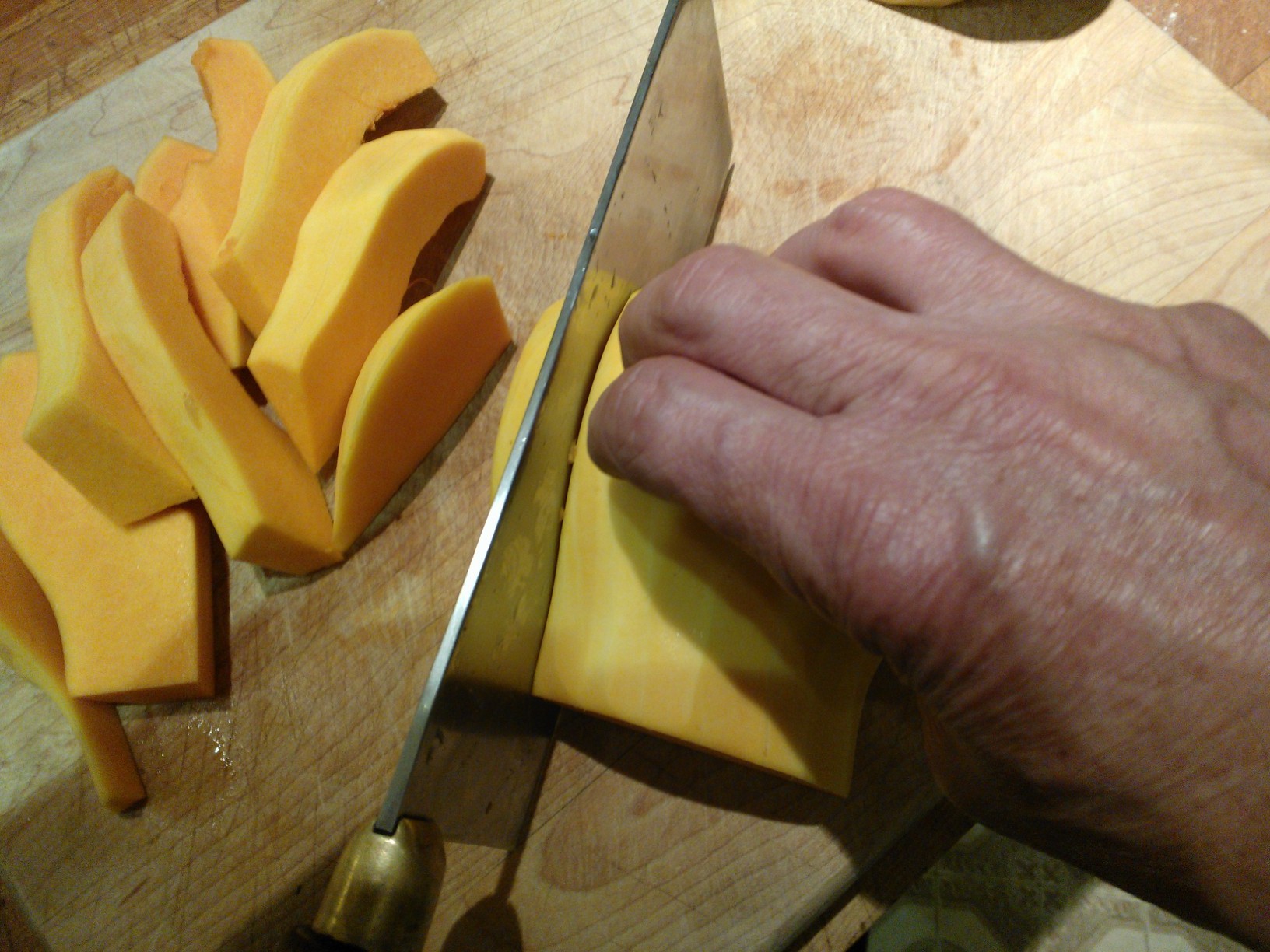
The knife is supposed to glide and be guided along the front of the fingers. Caution is advised as you learn but it will make things easier and quicker. Not to mention you’ll impress you’re friends.
Crossroads of Cooking- This is what I label those moments when you have several ways to go. Imagine you are at your favorite market and are faced with a great deal ingredients, lets say it’s between a big ass head of broccoli or some super looking Dino kale that are too good to pass up. Or you bring home a chicken and now gotta decide do I roast this? Or do I cut it up and make fried chicken? Or do I piece it out and do a braise with aromatics, olives and preserved lemon? Is the soup a puree or do chunky style? Slow cook that broccoli and mix it with penne pasta ( a future post I promise)? Do the curry treatment or a get down BBQ? I’ll be referring to this term in posts a point of reference.
Braising– Can be used for proteins or vegetables alike. For proteins we usually start with a bit of oil in a heated pan. Add the protein (fish, chicken, tofu, etc.) and brown, not too dark. Next a bit of liquid is added. Not too much only enough to come up to around a quarter or half way the height of the item in the pan. Next the pan can be covered and cooked very slowly in the oven (250-325F) until done or on top of the stove. Again, covered, again slowly. Emphasis on slow. This can be done with other items in the pan like vegetables, herbs, spices.
Vegetables can be braised as well. (See photo below) One of my favorites is to cook cauliflower or broccoli in large pieces in a heavy bottom pan with a tight lid. Place the vegetable in the pan with a 1/4 inch of water, 2 Tablespoons of extra virgin olive oil some thin sliced garlic and a few chile flakes. Cover, bring to a simmer and lower heat. Cook until water is almost evaporated, uncover and cook slowly until the vegetables just begin to brown. Not to worry if they soften a bit. The trick though is to time it right so you get just a bit of brown, no water left and a gentle firmness in the middle of the vegetable pieces.
 Braising Butternut Squash
Sauteing Here the item you want to cook is added to a very hot pan with a little oil or butter. The concept is that a smallish amount of food is cooked at a time relevant to the size of the pan. Rule #1. Don’t crowd the pan. If you do then what you’ve got in there is going to steam and not saute. Saute is all about high heat, cooking quickly often with one of the goals being to add some color to the food being cooked, this adds flavor. One note. sauteing can be a first step in building a dish. The browning process being the point. When the item is sautéed then it may be transferred to another pan or pot and finished with other ingredients, liquids in the oven or on top of the stove.
Roasting- Probably one of the most used cooking terms out there. You see it every where. TV, the web, books and menus. Roasted this and roasted that. Essentially means that we are going to take something and cook it with pretty high heat (unless its slow roasted, sorry) most often in the oven, uncovered using a little oil or butter to help the process along. Commonly the item(s) roasted gain quite a bit of color (caramelization or the Maillard reaction ). This offers up lots of flavor and some texture. Vegetables, meats, fish, fruits, spices all can be roasted. Use this technique to add variation of flavor and texture in your foods.
Baking– A term I reserve mostly for items that are either made with dough or batters. Think cookies, breads, pizzas, pies, cakes and the like. We’re talking oven here. We will reserve this term for just that, making those items that will be a flour based food.
The well seasoned athlete is available for cooking instructions, culinary mentoring or skills development. Groups or individuals. Contact: wellseasonedathlete@comcast.net
Click here to return to the front page of The well seasoned athlete.
 the well seasoned athlete
This looks great, Thom. I look forward to reading more.
Thanks. Keep checking in. More to come!
I would know that left handed cutting technique anywhere.